Friday, May 4, 2012

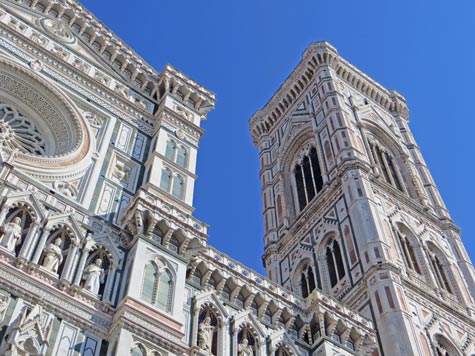
Brunelleschi's dome

It
started
the
Renaissan
ce in Florence and 
sparked the Medici Le
gacy of patronage and spo
nsership of culture, a feat of
defying engineering accomplished
by an architect who looked to the
classical period for inspiration, build
ing orphanages with columns and ar
ches, Brunelleschi spurred the huma
nist revolution unkowingly as soon as
he built the dome at santa maria del
 fiore,the dome of Florence

Wednesday, May 2, 2012

Sonnet

A sonnet is a 14 line poem with 10 syllables per line. They were invented during the Italian Renaissance, and Shakespeare wrote many of them.

Renaissance Italy
Exhausted with living in the darkness
Tired of just surviving, cultureless
The Renaissance, like a candle that's lit
Hoarding great wealth, city-states benefit
Artists with a cause smear paint on canvas
Rich patrons beautify their new cities
Tools chisel stone, weapons long abandoned
Under a blanket of discovery
Lies an ever present feud, dividing
Radical Humanists against the church
But life continues with mirth, ignoring
New ideas are formed, thinkers rejoicing
Paranoid geniuses keep plans hidden
The dark is forgotten in the clamor

Sunday, April 29, 2012

Florence Art Tour

This week, I went  on an art tour to see the famous works of artists that were sponsored by the Medici Family. The Medici family lived in Florence during the Renaissance. They were great patrons of art and culture. Because the Medici family revolutionized European life, some say that they were the godfathers of the renaissance. They left a legacy that changed history.
This painting is Prima Vera by Sandro Botticelli. He was one of Lorenzo Medici's favorite artists. This painting was controversial at the time because it didn't show biblical events. It portrayed a Pagan custom.

This is Donatello's David. It was the first freely standing bronze statue created during the Renaissance. It marked the beginning of art patronage.
Michelangelo was a student at the first ever art university in Florence. When he was just a teenager, Lorenzo Medici brought him under his wing. Lorenzo told Michelangelo to create non-biblical art, but Michelangelo refused. Instead, he painted works like this one, titled The Creation of Adam.
Leonardo Da Vinci was another artist patronized by the Medici family. He was interested in engineering as well as art. As a child, he helped a master artist create commissioned paintings. His use of vibrant colors set his work apart. Interested in human anatomy, he dissected multiple corpses.
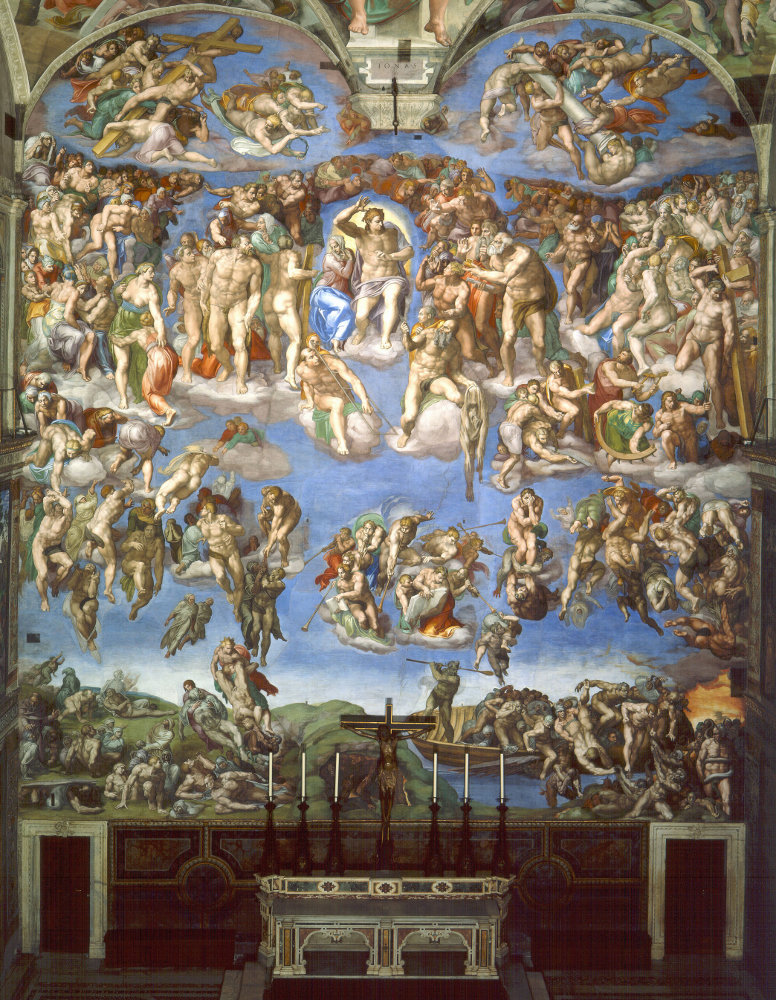
On of Michelangelo's masterpieces is the ceiling of the Sistine chapel. He painted it at a time when Giovanni Medici was pope Leo X. The Medici's had religious power as well as being the despots of Florence. Leo X commissioned the ceiling in the Vatican to Michelangelo, who cynically obliged. He thought his time was better spent sculpting and. Although Michelangelo resented being forced to paint the Sistine chapel, it is now viewed as one of the greatest works of Renaissance Europe.

Haikus

A new age that sprouts
From the ruins of dark ages
A revolution

The Sistine Chapel
Michelangelo's great work
Sullenly painted

Medici family
Godfathers of Renaissance
Name brings resentment

Forced to deny truth
Or accept consequences
Catholic church rules

Florence, a city
of patronage and patrons
Beautiful

Wednesday, April 11, 2012

M10: Samurai School

     As a flashed into Japan with my best friend Lola, I heard the clash of swords and whoosh of arrows. We had stepped into a war zone. Heads lay rolling in pools of blood. Samurais in heavy armor fought against other samurais. Scared, we rushed to a sheltered tree. One dynamic samurai approached us. "Become a samurai to fight for Japan's freedom" he said. Intrigued, we agreed. He led us to a nearby pagoda, were samurai meditated in zen gardens. When we entered, we were assigned to a master, a fit young man with straight hair. "If you want to become a samurai, you must become mentally prepared first. You must learn to accept pain and you must develop a sixth sense." he said. Reluctantly, we all took a journey up a tall mountain. At the top, snow dusted the ground and we started shivering. We were directed to remove our shoes. Then we started to pick our way down the path.
     At the end of the 5 hour hike, my feet were numb. I couldn't feel anything. Blood ran in rivets from the cuts on our soles, and gravel stuck to our toes. The sight of my mangled body should have terrified me, but I felt nothing. "Congratulations." our master said. "You have stopped feeling. You will now learn to have a sixth sense." As we stood still, he took out a thin bamboo rod and whacked us with it, leaving red welts on our faces. "What the.." Lola said as he delivered another blow. The hits came again and again, until we learned to dodge them. After we avoided the rod 20 consecutive times, he set it down. "You now will be able to sense danger." he said. "Your mental training is complete."
     We had lessons in fencing and archery, and were deemed ready to fight. We were wrapped in multiple silk kimonos and covered in a thin armor made of metal plates. Leather shin guards were attached to our legs, and we walked to the battle field. I knew that I should have been nervous or excited, but I just felt numb. The fight had already started, so we picked an available opponent and advanced. With long, curved swords, we beat our foe to the ground. I dodged every blow and parried with vengeance. Our feet barely touching the ground, we struck down everyone in sight.
     After a few minutes, Lola and I split up to fight individually. My competitor was hard to beat, and I started panting. He blocked all my moves and advanced with quick hits. I kicked him and he became unbalanced. Taking advantage of the moment, I swung my sword through the air in a slow motion arc. Without thinking, I had aimed my sword at the bare curve of his neck. As blood escaped his throat, I realized what I had done. I felt my weapon slice through a last piece of cartilage, and his head fell into my lap. A strangled scream escaped me, and horror filled my veins. Suddenly, the emotion I had numbed myself too came back.
     I pushed the bloody carnage off of me. Lola backed away in disgust. Scared at what I had become, I ran away from the battle. I jumped in a nearby stream and ribbons of red washed off my clothes. I was against all types of killing. I didn't eat meat and avoided blood at all costs. I marveled at the emotionless killing machine I had become. The man I killed probably had a family at home, a wife waiting in terror when he didn't return. I  walked back to Lola and pulled her away from the continuing war. Although my friend was amazed at my behavior, she still followed me as we flashed back to 2012. I told her about how mental training had made me a zombie and how I now understood that it was good to feel emotion. Emotions are the only things stopping people from killing without mercy. She forgave me, and admitted that she had stabbed a guy in the leg. "Just like Cato stabbing Peeta" she laughed. We both vowed never to fight without reason again.

Friday, March 23, 2012

M9: Words Are Worth a Thousand Pictures

     Woken by the sound of oars slicing choppy water, I slid out of my bunk and climbed a set of stairs onto the deck of my ship. All around me, the China Sea stretched out for miles. After 30 days of sailing, I had found my sea legs, and I confidently strolled to the end of the vessel. Prince Shotoku had entreated me to travel to China as his advisor, so I had been given a crew and a boat. Once in China, I was to collect examples of Chinese culture to bring back to Japan. The adventure was very exciting, but sailing for months was starting to annoy me. I was understanding the ways of ocean travel, so I awoke the crew and we rode a wave of wind closer to our destination.
     The horizon line was fuzzy with morning fog. Miles away, a shape was becoming prominent in the haze. I could make out building and trees that dotted what I now realized was land. We increased our speed and were at the port of China within the hour. People carried sculptures of Buddha into pagodas and musicians played gagaku on shengs. I was amazed by the commotion, and I jumped off the boat with gusto. In a frenzy, I grabbed huge stone carvings, maps of Chang'an, drawings of temples, Buddhist writings, and Chinese calligraphy. At the last minute, I grabbed an unimportant piece of poetry and shoved it into the already full boat. When I had substantial collection of Chinese culture, I headed back to Japan.
     Our boat moved slowly away from the mainland. With the boat brimming with artifacts, I felt a sense of accomplishment. I had completed Prince Shotoku's task, and I would be honored when I reached Japan. A ship was moving toward us, but I thought nothing of it until the vessel was practically on top of us. Suddenly I noticed the flag waving from its mast. Pirates! I called all hands on deck, but already the swashbucklers were boarding our boat. They took all of our precious cargo. They left after the deck had been cleaned of everything. Dismayed, I realized that I would have to report to Prince Shotoku empty handed. We didn't have enough supplies to go back to China. With a heart full of sorrow, I retreated to my quarters.
     After the attack, the journey was more subdued. We anxiously awaited our arrival in Japan, fearing our failure. As I halfheartedly commanded the crew, a lone piece of paper on the deck caught my eye. Flipping it over, I quickly scanned the beautiful poem written on it:
Sitting by the oak,
My mind wanders, as always,
Transporting me to
A peaceful place where nature 
And man live in harmony
I recognized the poem as tanka, a Japanese form of literature with 5 lines. Hope overcame me. Maybe my journey hadn't gone to waste.
     Rushing up the steps of Prince Shotoku's palace, I hoped he would accept the poem. I entered the throne room and showed the ruler my makeshift collection of culture. At first, he was skeptical of my marginal work. "Is this all you have brought?" he asked gruffly. As he read the poem, however, a smile spread across his face. "I love the use of syllables." he stated. Showing the poem to others that had gathered, I knew that I had made the right decision. The royalty started making up tanka poems of their own. Word quickly spread through the city about the new phenomenon. I had just introduced Japan to a new art form.

Friday, March 9, 2012

M8: Matchmaker Mistakes

     Trekking through the Mayan rain forest, I approached ancient Chichen itza. The sun crested the horizon as women ground maize on stone blocks. Teenagers watched chubby babies and stray farm animals and swept dirt floors. At the center of the city, a giant temple rose up into the lightening sky. I walked up to a thatched house in the rural section of the city. An aging couple stood in the doorway, arguing heatedly. "The atanzbah paired our talented son with that ugly witch from down the street." the man said. Abruptly, they turned to me and stopped talking. "What do you want, outsider?" the women said with hostility. "I'm the most skilled matchmaker around. I have come to help you find a great wife for your son." I replied arrogantly.
     After much negotiating, I reached an agreement with the couple. They would pay me only if I got Ixmucane to marry their son Kukulcan. Ixmucane was a 15 year old girl who was great at cooking, weaving, and singing. Thinking this would be an easy task, I went to interview Kukulcan. As I approached the field where he was working, I hesitated. Kukulcan lay under a tree, fast asleep. I tactfully nudged him with the toe of my boot, jarring him awake. I interrogated him, but he had little to share. He was weak, ugly, and stupid. Trying to consolidate a list of good characteristics while still being honest, I started to worry.
     While walking back to his parents, I crossed the path of a group of Mayan soldiers. They held magnificent, curved bows and graceful spears. Intrigued by the fine weaponry, I asked where it had been made. Surprisingly, they pointed in the direction of Kukulcan. "He is the most skilled weapon maker around. All wealthy warriors use his weapons." a burly soldier informed me. Excited, I began to run towards Ixmucane's hut. I was met by her hunch-backed parents. I told them that even though Kukulcan was ugly and weak, he would pay a large dowry. Reluctantly, Imuxcane's family agreed to meet with Kukulcan's family to discuss possible marriage.
     The parents haggled for hours. I sat by quietly and watched, amused. Finally, a decision was reached. Kukulcan would give Imuxcane's parents a dowry that could pay for new farming equipment and enough seeds to last 20 years. He would also farm their fields for 5 years. Both families were happy, and villagers built a hut behind Imuxcane's family house for the couple to live after the ceremony. Special clothes were woven, and invitations were sent out. The wedding was about to begin!
     A priest stood at an altar in the plaza. In front of him stood Kukulcan and Imuxcane. Both of them looked sad to be there. Suddenly it hit me. No one had asked the couple if they wanted to be married. They had had no say. I hadn't meant to help set up a forced marriage. I thought being a matchmaker would be more like "Fiddler on the Roof". Since I didn't want to be sacrificed (or was that the Aztecs?), I stood by quietly as the couple was blessed by the priest. They were now officially married. Defeated and angry, I traveled back to New York. I would never again be a matchmaker.